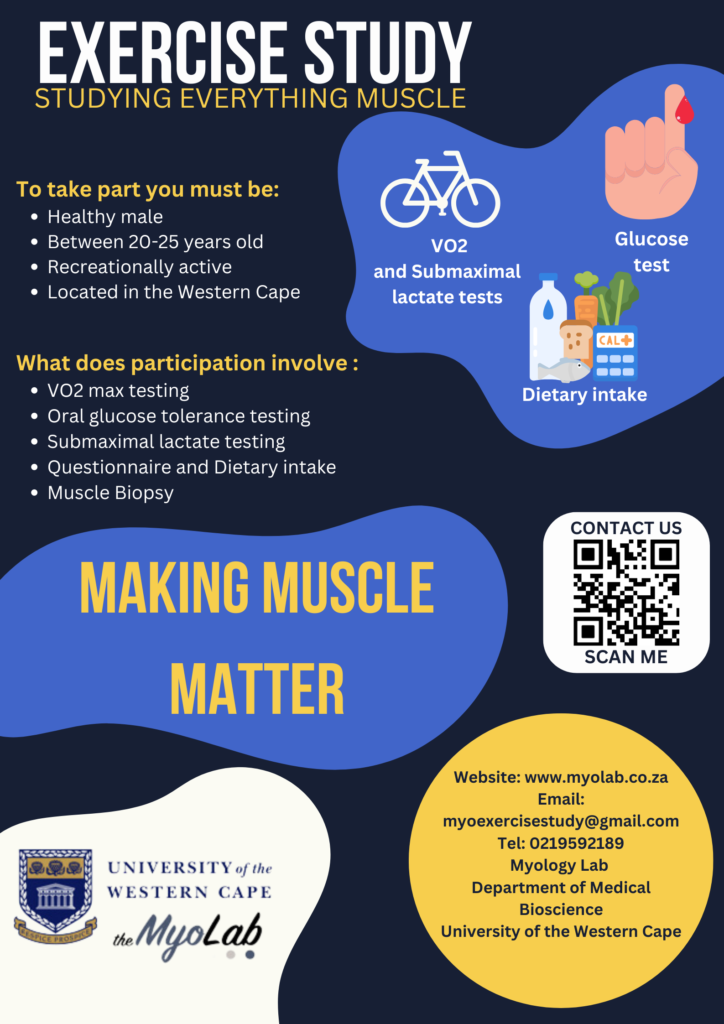
PROJECT TITLE
Can variations in glucose and lactate kinetics from healthy South African males be explained by skeletal muscle metabolic properties? – identifying novel predictors for insulin resistance
What is the study about?
When muscle becomes insulin resistant, it is no longer able to effectively take up glucose from the blood which can eventually lead to Type 2 Diabetes (T2D). T2D is a global concern affecting millions of people around the world, with lifestyle factors such as poor diet, lack of physical exercise and obesity being major contributors.
Changes in the body’s use of glucose is the primary cause for developing insulin resistance, eventually leading to T2D. However, recent evidence suggests that the use of lactate is affected before the development of insulin resistance for unknown reasons. Skeletal muscle plays a big role in the glucose and lactate control and these properties may differ between people. Therefore, the current study aims to investigate the glucose and lactate metabolism in the muscle of individuals from across the Western Cape.
Would you like to participate in the study?
You can participate if you are:
- A male currently residing in the Cape Town area.
- Between the ages of 20 and 25 years old at the time of data collection.
- Recreationally active – this would include fitness activities like walking, running, gyming, and sport participation etc at an amateur or recreational level 2 to 5 times a week. But not participation at an elite level.
- Healthy with no underlying acute or chronic illness, and no injuries for the past 3 months.
- Healthy weight, not overweight or obese – within an approximate 18.5-24.9 BMI range.
- Following a mixed diet regime of approximately 50% carbohydrate content.
What would you be expected to do?
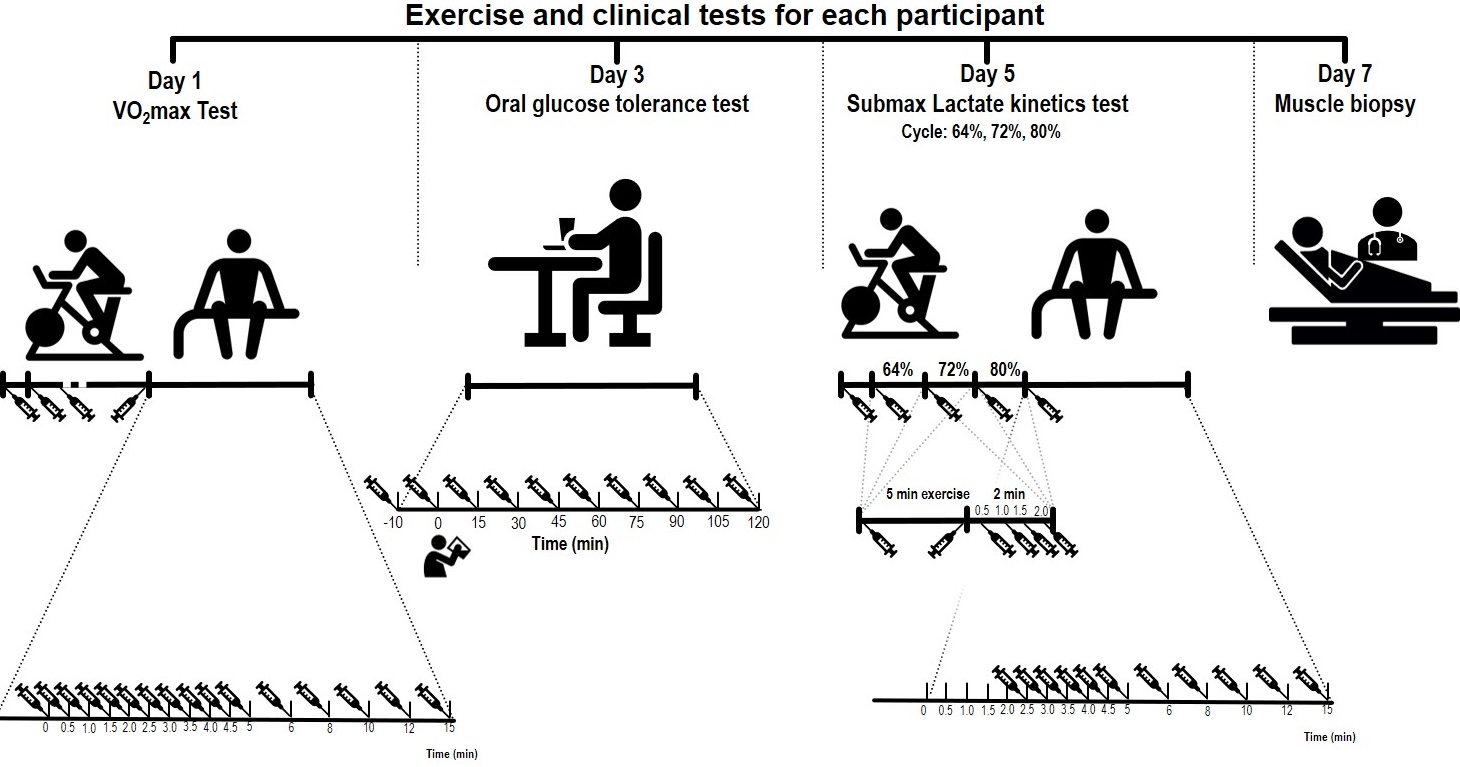
Schematic of tests that would be performed
Visit 1: Body measurements such as weight, height, and BMI will be taken. You will then perform a maximum exercise test on a Watt Bike with increasing workload, while blood samples are collected before, during, and after the test.
Visit 2: Your blood glucose clearance rate will be measured over 2 hours after consuming a glucose-water solution. This requires fasting overnight and avoiding physical activity the previous day, with blood samples taken before and at intervals after glucose consumption.
Visit 3: You will complete three 5-minute exercise tests of increasing difficulty, with 2-minute rest periods in between. Blood samples will be collected before, immediately after, and at intervals during a 15-minute recovery period.
Visit 4: Ultrasound will be used to determine the thickness of the quadriceps. After that, a muscle biopsy of the quadriceps will be performed by an experienced medical doctor, involving a local anesthetic, a small incision, and the extraction of a muscle sample with a suction-assisted needle. The wound will be treated according to medical procedures.
What are the benefits of participating?
Participating in this novel study may help uncover mechanisms of insulin resistance and T2D in a South African context, potentially contributing to future research and disease prevention. You will gain access to specialized tests not readily available outside research settings. Through VO2max testing, glucose tolerance, and lactate kinetics testing, you will gain insight into your cardiovascular and respiratory fitness. This data will be valuable for assessing your personal health and considering lifestyle adjustments.
What are the potential risks?
The physiological and clinical tests involve minimal risk, though VO2max testing may cause physical strain, cardiovascular stress, and respiratory challenges, as well as muscle soreness in unfit individuals. Finger pricks for blood samples are generally safe but might cause some pain and discomfort, with a rare risk of infection. Muscle biopsies carry low risk but may result in discomfort, pain, infection, or bruising; these risks are managed through sterile procedures and qualified medical oversight. All procedures will be performed by trained professionals to ensure safety and proper technique.
Will my details be kept confidential?
Your biometric and biological data will be securely stored and accessed only by the principle investigator. The consent form will include only your name and unique identification code, in line with the Protection of Personal Information (POPI) Act of South Africa. The use of the unique code ensures your anonymity for the data obtained, with your information remaining confidential and not shared with other parties, including in any study publications.